
A resident fills bottles with water. Russian forces previously damaged the city's water supply.


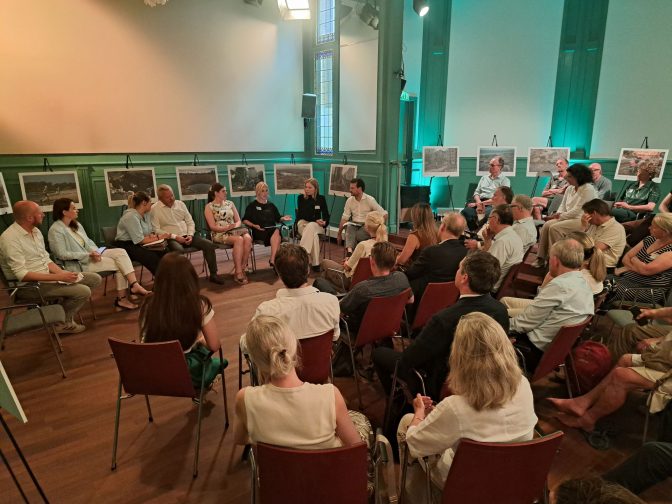
The Netherlands has become the latest stop on the international #WASHinWAR tour. Through a partnership with…
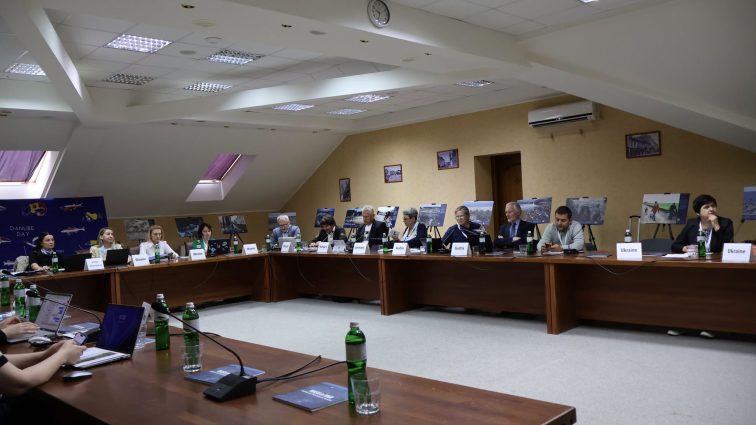
Experts from the WASH Programme of Caritas Ukraine participated in the Meeting of Heads of Delegation…
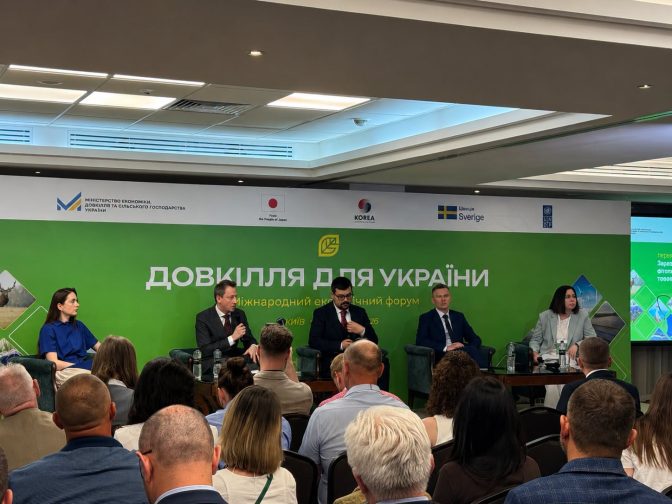
The WASH Programme team of Caritas Ukraine participated in the International Environmental Forum “Environment for Ukraine”,…
MISSION
We strive to draw attention to the catastrophic consequences of warfare on Ukraine’s water resources and to unite the international community, government, humanitarian organizations, and our society to overcome these challenges.
Consequences of Russian Attacks on Critical Infrastructure:
8.5 million people
will need assistance with water supply, sanitation, and hygiene in 2025.
Source: UN Humanitarian Response Plan
Over 1,000 km of water supply networks
have been destroyed due to shelling and hostilities.
Source: Ukrinform, based on data from the President of the Association "Ukrvodokanalecology" Dmytro Novytskyi.
18 cubic kilometers of water
were destroyed by the Russians during the explosion of the Kakhovka Hydroelectric Power Station, an amount that could supply the entire human population with water for two days.
Source: ArgoPolit, based on data from the General Director of "Ukrhydroenergo" Ihor Syrota.
₴104.06 billion
in damages inflicted on our water resources.
Source: Ministry of Environmental Protection and Natural Resources of Ukraine.
23,444 tons
of pollutants have poisoned water bodies.
Source: Ministry of Environmental Protection and Natural Resources of Ukraine.
These are not just numbers – this is the reality millions of people live in.
Map of Losses and Recovery
An interactive map displays the real scale of the war's impact on Ukraine's water resources. You can see ecocide sites – destroyed reservoirs, polluted rivers, and damaged water supply networks.
But this map is not only about losses. It also highlights regions where access to water has been restored thanks to the efforts of Caritas Ukraine, international partners, and local communities.
Explore the map to learn more about the challenges and successes in the fight for clean water.
data for 2024

Kherson, 2023, Photo: Petro Batanov
On June 6, 2023, the Russians destroyed the Kakhovka HPP dam.
This led to a massive water supply crisis. Water sources dried up, and communities in Dnipropetrovsk, Zaporizhzhia, Kherson, and Mykolaiv regions were left without water.

Kherson region, 2022, Photo: Korabelov.info
Russian forces blew up the Dnipro-Mykolaiv water pipeline on the occupied territory of the Kherson region, forcing Mykolaiv to switch to a centralized supply of technical water with high salt content.
TOT of Crimea
On December 15, 2024, two Russian river tankers sank in the Kerch Strait. As a result, fuel oil and other petroleum products leaked into the sea, causing an environmental disaster that spread to the Crimean coast. Fuel oil slicks were found in Sevastopol, Feodosia, Alushta, and Sudak. Ecologists estimate that eliminating the consequences of this disaster could take about 20 years. Additionally, the situation with drinking water access on the peninsula worsens yearly due to drying reservoirs.

Zaporizhzhia, 2024, Photo: Denys Shmyhal
The Russian army launched a missile strike on the DniproHES hydroelectric power plant, causing an oil spill of approximately 0.5 tons into the Dnipro River, significantly polluting water and surrounding soil.

Donetsk region, 2023, Photo: Telegram channel "Operative Armed Forces of Ukraine"
The Russian army blew up the Karlivka Reservoir dam, flooding several villages.

Kharkiv, Donetsk, Luhansk regions, 2022 – present, Photo: The New York Times
Pollution of the Siverskyi Donets River. Hostilities and the enemy’s attempts to cross the river disrupted the entire water management system.

Chernihiv region, 2024, Photo: Stas Kozliuk
The poisoning of the Desna River following the destruction of sedimentation tanks at a sugar factory in Tyotkino.

Kyiv region, 2022, Photo: Wikipedia
The Ukrainian Armed Forces were forced to blow up a dam in the village of Kozarovychi to prevent the enemy from advancing on Kyiv.

Kyiv region, 2022, Photo: State Emergency Service of Ukraine
Russian forces launched a missile strike on the Kalynivka oil depot, causing hazardous pollution of underground and surface waters.

Kharkiv, 2024, Photo: State Environmental Inspectorate of the Kharkiv Region
Russian UAVs attacked an oil depot, leading to petroleum products spilling into the Nemishlya River and further downstream into the Lopan, Udy, and Kharkiv Rivers.

Kharkiv region, 2022, Photo: Suspilne
The Russian army blew up the Oskil Reservoir, leading to the destruction of the reservoir's ecosystem and the extinction of valuable fish species.

Mykolaiv region, 2022, Photo: State Environmental Inspectorate of the South-West District
Enemy drones damaged reservoirs, causing pollution in the Bug Estuary, contaminating an area of approximately 750 square meters.
TOT of Kherson Region
The occupation administration itself admits that the condition of local water bodies is critically dangerous. This water cannot be used for household or agricultural needs. According to the Center for National Resistance, laboratory tests of water quality in reservoirs in Nyzhni Sirohozy, Pershopokrovka, Verkhnye Sirohozy, and Novooleksandrivka showed unsatisfactory results that pose a health hazard.
TOT of Zaporizhzhia Region
The Russians have created water access problems in many communities. In early 2025, the occupation authorities cut off water supplies to seven settlements, most likely due to pipeline contamination from poor maintenance, according to the head of the Kyrylivka Military Administration, Ivan Maleev.
TOT of Donetsk Region
Due to damage to water pipelines and power outages at filtration stations caused by hostilities, occupied areas of the Donetsk region face constant issues with access to drinking water. The occupation administration does almost nothing to repair and restore main water pipes. Many residents of Donetsk are often forced to collect and filter technical water at home.
Temporarily Occupied Territories (TOT) of Luhansk Region
As of February 2025, 220,000 residents were left without drinking water due to the power outage at pumping stations. The reason lies in the inaction of the occupation administration, which does not maintain critical infrastructure, according to the head of the Luhansk Regional Military Administration, Artem Lysogor.
Kharkiv Region
Thanks to the WASH program by Caritas Ukraine, efforts have been made to restore access to drinking water. Two filtration stations have been installed for water purification, and eight wells have been restored.
Learn MoreDonetsk Region
Thanks to the WASH program by Caritas Ukraine, efforts have been made to restore access to drinking water. Fifteen filtration stations have been installed for water purification, and fifteen wells have been restored.
Learn MoreZaporizhzhia Region
Thanks to the WASH program by Caritas Ukraine, efforts have been made to restore access to drinking water. Eleven filtration stations have been installed for water purification, and four wells have been restored.
Learn MoreDnipropetrovsk Region
Thanks to the WASH program by Caritas Ukraine, efforts have been made to restore access to drinking water. Nineteen filtration stations have been installed for water purification, and one well has been restored.
Learn MoreKherson Region
Thanks to the WASH program by Caritas Ukraine, efforts have been made to restore access to drinking water. One filtration station has been installed for water purification, and two wells have been restored.
Learn MoreMykolaiv Region
Thanks to the WASH program by Caritas Ukraine, efforts have been made to restore access to drinking water. Four filtration stations have been installed for water purification, and seven wells have been restored.
Learn MoreWater in the Fire of War


A resident fills bottles with water. Russian forces previously damaged the city's water supply.
The Kakhovka Reservoir is drying up after Russian forces blew up the dam of the Kakhovka Hydroelectric Power Plant, causing an ecological disaster.
Volunteers and other people push a stretcher carrying an injured local elderly resident who was evacuated from the flooded area after the destruction of the Kakhovka dam.
The occupiers are using a scorched-earth tactic—relentless guided aerial bombs, artillery, and FPV drones aimed at destroying all life around.
People stand in line to collect delivered drinking water in liberated Kherson, as the Russian occupiers left the city without electricity, water, and heat after their retreat.
The destruction of the Kakhovka Hydroelectric Power Plant dam by Russian forces caused flooding in parts of cities and villages in the Kherson and Mykolaiv regions. In the photo: a billboard that once stood by the road at the entrance to the Novovasylivka community.
A partially dried-up area of the Kakhovka Reservoir near Zaporizhzhia.
A man sits near humanitarian aid on a pontoon before it is transported to the village after roads were flooded due to the destruction of the Kakhovka dam.
A Russian shell hit a stockpile of ammonium nitrate, creating a massive crater approximately 50 meters in diameter and 25 meters deep.
In just three months of occupation, the Russians completely destroyed this village. The photo shows a destroyed bridge over the Siverskyi Donets River as a result of Russian aggression.
The Desna River was contaminated due to the destruction of sedimentation tanks at a sugar factory in the Kursk region.
The contamination of the Desna River due to the destruction of sedimentation tanks at a sugar factory in the Kursk region led to a massive fish die-off.
After Russian forces blew up the Kakhovka Hydroelectric Power Plant dam, massive flooding hit parts of cities and villages in the Kherson and Mykolaiv regions. At the same time, towns and settlements upstream were left without water.
The photo shows the dried-up bed of the Kakhovka Reservoir in Maryanske.
Kherson submerged in water after the terrorist attack on the Kakhovka Hydroelectric Power Plant. The hardest-hit area was the Korabelny district, where more than 1,800 homes were flooded.
This is what the Kakhovka Reservoir looked like after the destruction of the Kakhovka Hydroelectric Power Plant dam by Russian forces.
An emergency worker at the site of water drainage operations in the flooded village.
People collect drinking water in Kherson after the liberation of the city from Russian occupiers, who blew up a significant part of the critical infrastructure before retreating, leaving residents without electricity, water, and heat.
A resident of an apartment building receives a food package from volunteers on a flooded street after the destruction of the Kakhovka dam.
People wait for a pontoon crossing in the flooded zone caused by the destruction of the Kakhovka dam.
Vitalii walks through his flooded home after the destruction of the Kakhovka dam.
A woman walks past a destroyed residential building following shelling as she heads to fill empty bottles with water.
A mined shoreline of the Kakhovka Reservoir after the destruction of the Kakhovka HPP dam by Russian forces.
A family carries bottles of water they collected from a farmer’s well. After de-occupation, cities and villages often remain without electricity, communication, and water, as Russian forces destroy critical infrastructure.
Residents of the city collect water from an emergency service tank. Due to Russian shelling, the water pipeline in Kostiantynivka was damaged, leaving the city without water supply since 2022.
A man paddles a rubber boat under a bridge destroyed by fighting in Staryi Saltiv after the liberation of the Kharkiv region.
A man collects water from the Dnipro River in the first days after Kherson was liberated. Following de-occupation, the city was left without water supply, electricity, and communication. People were forced to fetch water from the river. This area in Kherson is now extremely dangerous, as Russian forces remain on the opposite bank.
A mined shoreline of the Kakhovka Reservoir after the destruction of the Kakhovka HPP dam by Russian forces.
A mined shoreline of the Kakhovka Reservoir after the destruction of the Kakhovka HPP dam by Russian forces.
Caritas Ukraine is actively working on the implementation of its Water, Sanitation, and Hygiene (WASH) program to support affected regions.
What We Do

Restoring Water Supply Sources
We reconstruct wells, install pumping stations, and set up modular water systems and sanitation zones.

Providing Communities with Water Filtration Stations
We install high-performance and innovative water purification equipment and train local personnel to operate it properly.

Distributing Hygiene Kits
We support people in frontline areas where access to essential hygiene products is severely limited.

Improving Sanitary and Hygiene Conditions
We repair toilets, showers, and bathrooms in hospitals, schools, and shelters.

Delivering Drinking Water to Affected Communities
We transport water to areas where restoration is impossible and provide home delivery for people with disabilities.

Raising Awareness and Advocacy
We highlight the war’s destructive impact on water resources and the urgent need for joint efforts to protect them.
Our Impact
In 2024, WASH projects by Caritas Ukraine have already helped 200,000 people in Donetsk, Dnipropetrovsk, Kharkiv, Zaporizhzhia, and Mykolaiv regions. However, the needs continue to grow every day.
Stories of People
from Affected Regions
After the Destruction of the Kakhovka Dam, Mrs. Lyudmyla’s Home Was Completely Flooded
In the photo, Mrs. Lyudmyla stands in front of her home in Novovasylivka, Snihurivka Community, Mykolaiv Region. After the destruction of the Kakhovka Dam by Russian forces, her house was completely flooded.


People Face the Daily Struggle of Finding Water for Basic Needs
Novooleksandrivka is one of the many Ukrainian communities that lost access to clean drinking water due to the war.
"It’s Not Just Water, It’s Knowing That We Are Not Forgotten"
Another hero of our project is 73-year-old Valentina Mykolaivna from Kramatorsk, a city that endures constant Russian shelling.


We strive to support war-affected people and communities in their efforts to recover from the crisis and ensure access to essential water, sanitation, and hygiene services.
Head of the WASH Program, Caritas Ukraine

How Can You Help?
Visit the WASH in WAR Exhibition
Learn more about the issue and the real stories of those affected.
Spread the Word
Share information about this initiative on social media to raise awareness about the impact of war on Ukraine's water resources.
Support Caritas Ukraine
Join us in restoring access to clean water in affected regions.
Project Support Details

After the Destruction of the Kakhovka Dam, Mrs. Lyudmyla’s Home Was Completely Flooded
In the photo, Mrs. Lyudmyla stands in front of her home in Novovasylivka, Snihurivka Community, Mykolaiv Region. After the destruction of the Kakhovka Dam by Russian forces, her house was completely flooded.
"The water rose 2 meters in the yard and 1.7 meters inside the house. The stains on the walls still remind us of what we’ve been through," she shares.
The photo shows her house after the flood – a pile of mud, swollen furniture, mold-covered walls, and damaged appliances. "We lost almost everything – furniture, appliances, food supplies. The water destroyed the oven where we baked bread and flooded our cellar. It took us five months just to clean up, and rebuilding is still ongoing," she says with sadness.
"Caritas has been helping us – we received hygiene kits, which allow us to save money on essential goods. This support means so much in our situation."

People Face the Daily Struggle of Finding Water for Basic Needs
Novooleksandrivka is one of the many Ukrainian communities that lost access to clean drinking water due to the war.
"After the Kakhovka Dam explosion, our region’s water crisis became critical. The Dnipro River dried up, and many settlements lost access to water, even for technical needs. Our community also suffered – people had to search for water daily for their basic needs," says community leader Oleksandr Korniienko.
But we were not left alone in this struggle. Caritas Zaporizhzhia has supported our residents since the first days of the full-scale invasion, providing food assistance, repairing damaged homes, and now – solving the water supply crisis.

"It’s Not Just Water, It’s Knowing That We Are Not Forgotten"
Another hero of our project is 73-year-old Valentina Mykolaivna from Kramatorsk, a city that endures constant Russian shelling.
In October 2024, the residents of Kramatorsk had water only once every three days because key infrastructure supplying drinking water to the region was damaged by attacks.
Unfortunately, frontline communities often struggle with water supply issues due to ongoing fighting.
Despite the challenges, Mrs. Valentina remains optimistic, energetic, and full of life, continuing to care for her family and lead an active life.
She has come several times to collect drinking water provided by our team and has always been satisfied with its quality. For her, this is not just a bottle of water – it’s a chance to save money and use those savings for other urgent needs.
"I am very grateful to everyone involved in this project. Your help truly matters to us. This is not just water – it’s the reassurance that we are not forgotten," she shares.
Her story clearly shows the importance of support in these difficult times.