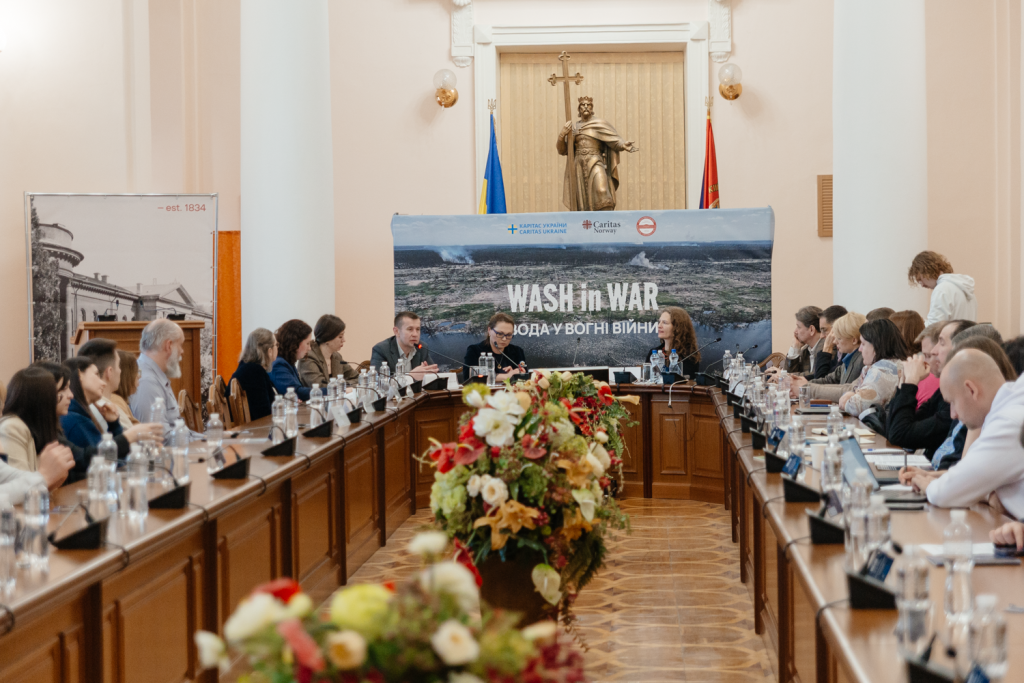
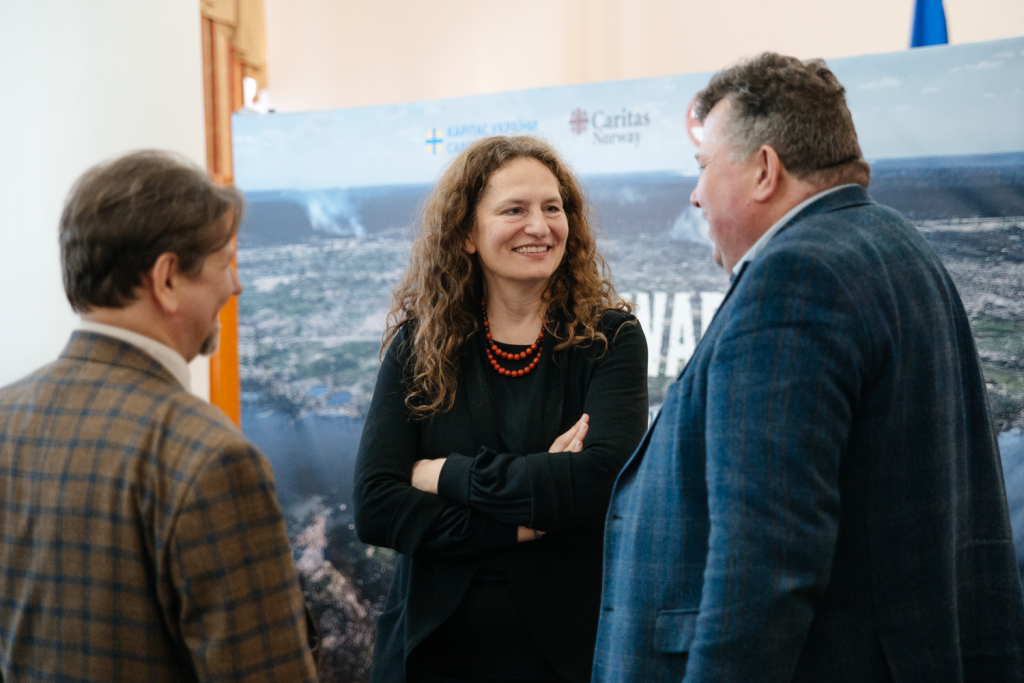
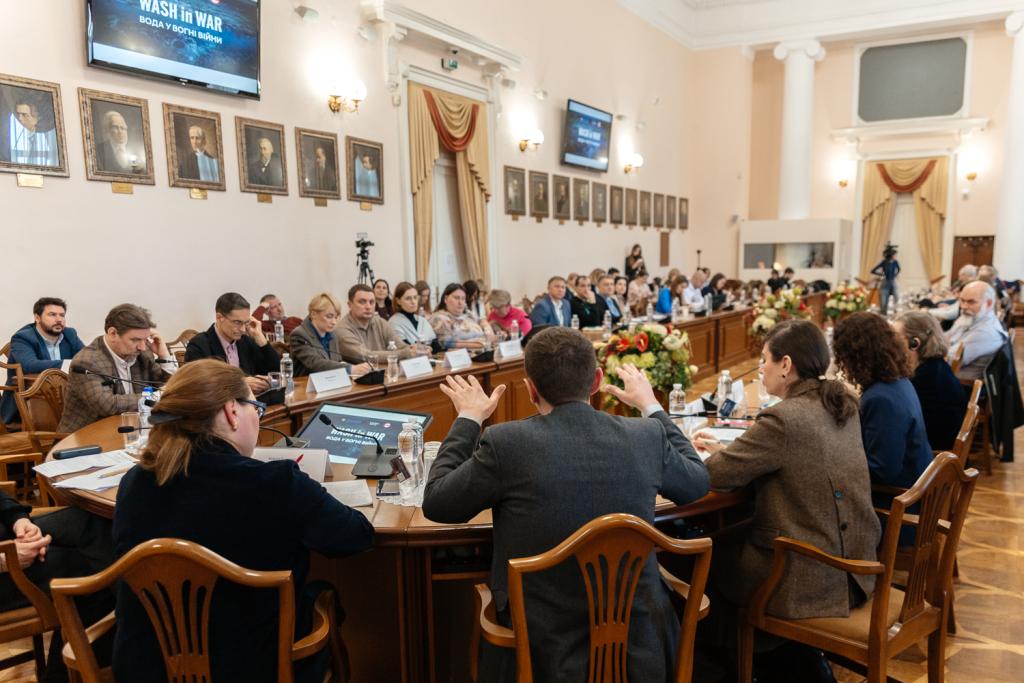
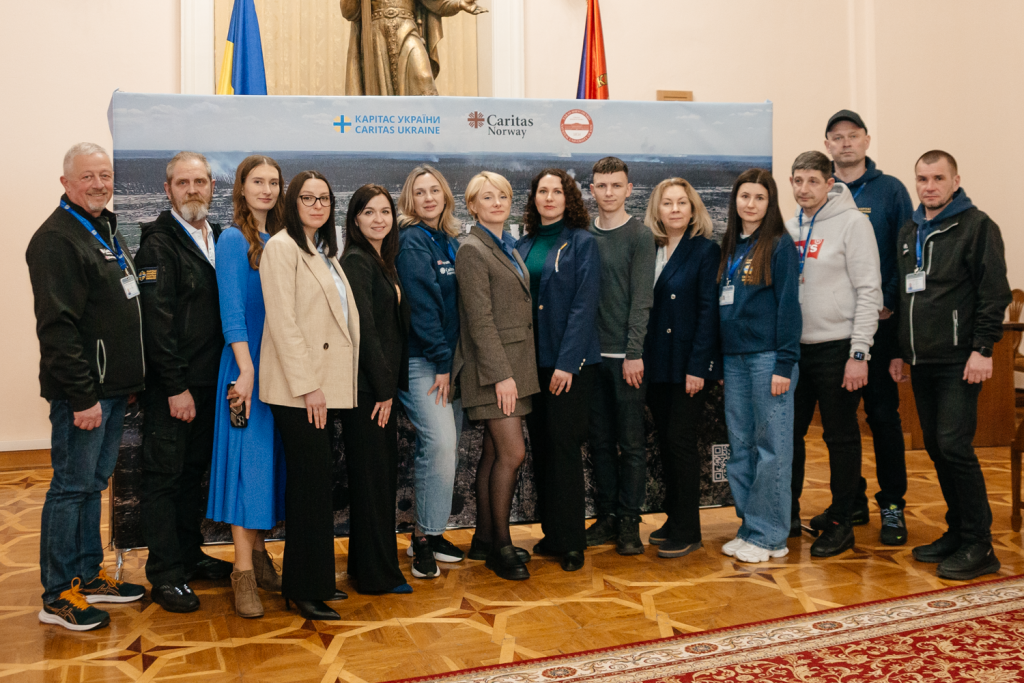
On March 20, 2025, within the framework of the #WASHinWAR campaign, a conference and photo exhibition “Water in the Fire of War” took place in Kyiv, organized by Caritas Ukraine in cooperation with Taras Shevchenko National University of Kyiv.
The event brought together government representatives, international partners, researchers, humanitarian organizations, and local communities to discuss the devastating impact of the war on water resources and explore pathways toward their recovery.
Among the speakers were: Member of Parliament Yuliia Ovchynnykova, Deputy Minister of Environmental Protection Serhii Vlasenko, Rector of Taras Shevchenko National University Volodymyr Buhrov, representative of the State Water Resources Agency Kateryna Havrylenko, Counsellor at the Embassy of Denmark Camilla Christensen Rye, WASH Cluster Coordinator François Belle, President of Caritas Ukraine Tetiana Stawnychy, WASH Programme Expert Tetiana Yatsiuk, as well as representatives of local self-government bodies, civil society, and international organizations.
During the discussion, participants addressed:
- the shortage of drinking water in frontline and de-occupied communities;
- contamination of water resources due to infrastructure destruction and hostilities;
- practical solutions implemented by Caritas Ukraine together with international partners;
- and the need to hold Russia accountable for environmental crimes.
“Water is the foundation of life, yet we often realize its true value only when we face scarcity or contamination. That’s why it’s essential not to wait for a crisis, but to act proactively and seek solutions together,”
— emphasized Tetiana Stawnychy, President of Caritas Ukraine.
In parallel with the conference, the photo exhibition “Water in the Fire of War” was held, documenting the destruction of water facilities and portraying the real stories of people and communities left without access to safe drinking water.
The #WASHinWAR campaign aims to draw attention to the issue and mobilize joint efforts of the government, international partners, civil society, and communities to develop sustainable, long-term solutions for water security in war-affected areas.