

On the eve of World Water Day, we opened the photo exhibition “Water in the Fire of War” in Kyiv in partnership with the State Agency of Water Resources of Ukraine. The exhibition became part of the nationwide environmental initiative “Save Water — Care for the Future” and the broader information and awareness campaign #WASHinWAR.
The exhibition addresses one of the key, yet often underestimated, dimensions of war — access to water as a fundamental resource for survival. Russia’s full-scale aggression, which has been ongoing for over 12 years, has caused large-scale and in some cases irreversible damage to Ukraine’s water resources, turning water access into a humanitarian challenge of national масштабу. According to the Humanitarian Needs and Response Plan (HNRP), in 2026 approximately 6.4 million Ukrainians will require assistance in water, sanitation, and hygiene.
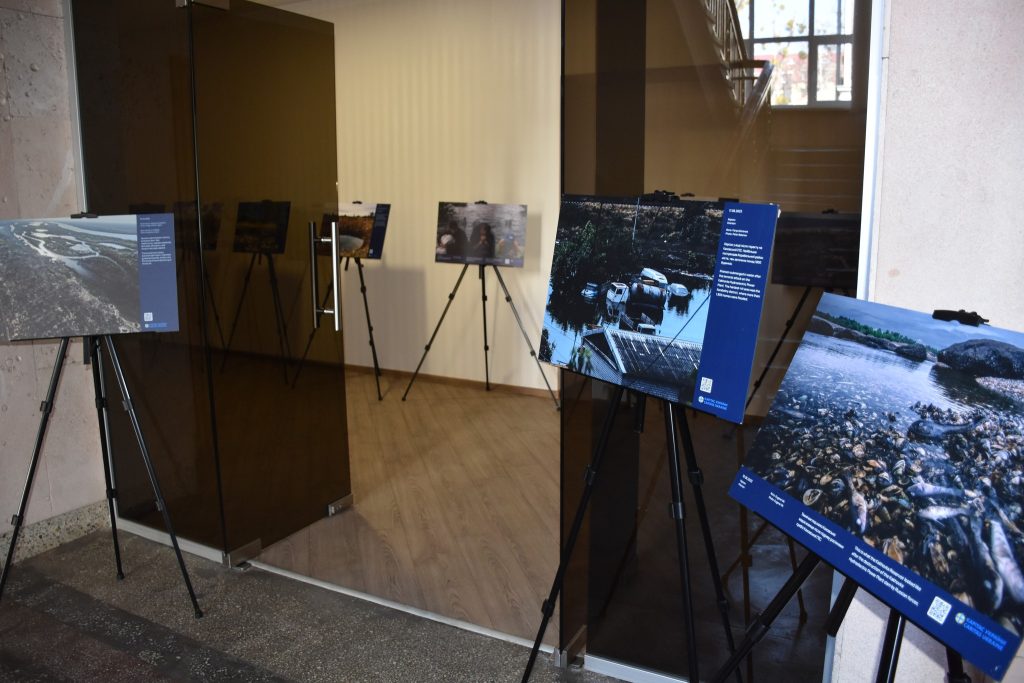
The photographs presented in the exhibition visualize these challenges through real stories of communities and individuals. The images capture destroyed water infrastructure, damaged and polluted water bodies, and flooded settlements that have become symbols of lost safety and normal life. Particular attention is given to the restricted access to drinking water caused by hostilities, directly affecting people’s health and dignity.
At the same time, the exhibition highlights recovery efforts — including the repair of wells, installation of water purification systems, and deployment of filtration stations in frontline communities. These solutions help restore access to safe water where it seemed impossible just yesterday.
The exhibition will run until the end of March 2026 and serves as an important tool for raising awareness about water security in times of war. As part of the cooperation between the State Agency of Water Resources and Caritas Ukraine, materials are also being prepared for international presentation, including at the Nobel Peace Center in Oslo.
“For us, this exhibition is a way to speak about water as a resource that becomes both extremely vulnerable and critically essential during war. It is also a call to develop systemic solutions that operate at the national level,” said Tetiana Yatsiuk, Head of the WASH Programme.