

What happens when water no longer flows from the tap?
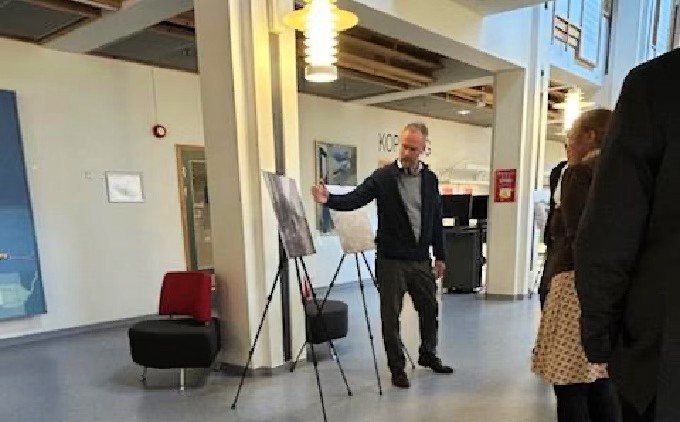
This question framed a public discussion held at Arendal Library, organized by Caritas Arendal in cooperation with Caritas Norway as part of the opening of the #WASHinWAR photo exhibition.
The exhibition, Water in the Fire of War, documents the impact of Russia’s attacks on Ukraine’s water infrastructure and highlights how water has become one of the hidden targets of modern warfare. Through photographs and personal stories, the exhibition illustrates the consequences of disrupted water services for communities and critical infrastructure.
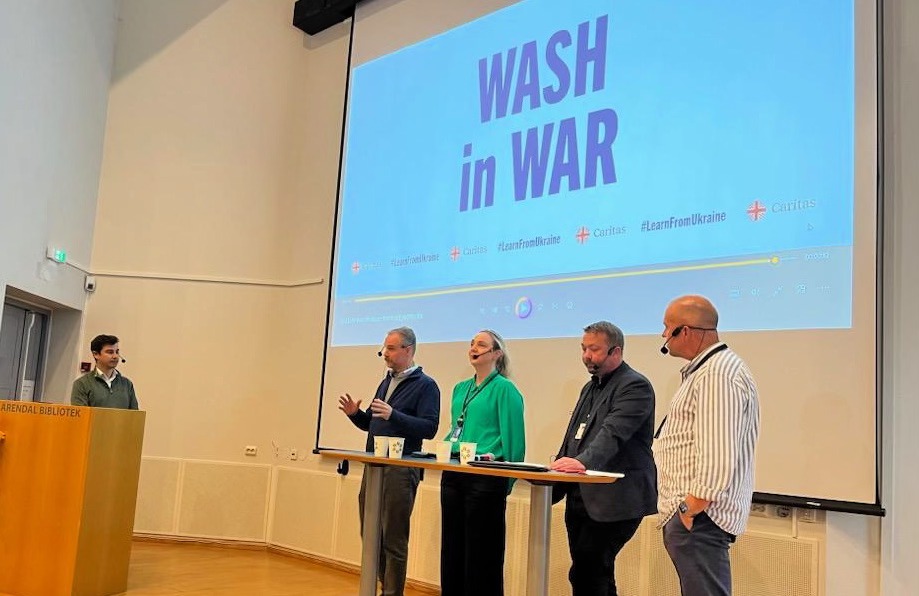
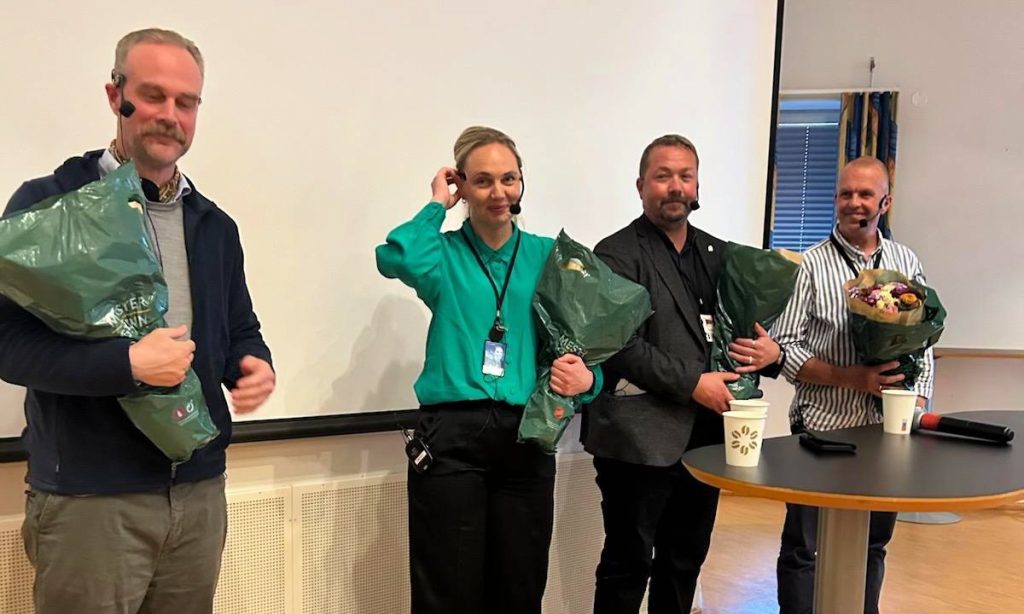
The panel featured Alexander Røskestad, former Regional Representative of Caritas Norway in Ukraine, Katrine Lia, Managing Editor of Agderposten, Thomas Kirkhus, Head of Water Preparedness in Horten Municipality, and Terje Sandik, Head of Community Safety and Preparedness in Arendal Municipality. The discussion was moderated by Joris Neyens from Caritas Arendal.
Drawing on his experience in Ukraine, Alexander Røskestad shared insights into how attacks on water infrastructure affect civilian life and community resilience. Municipal representatives discussed Norway’s own preparedness systems and the measures needed to strengthen resilience against potential disruptions to water supply.
The role of media in informing the public and countering disinformation was also highlighted as an increasingly important element of societal preparedness and resilience.
Participants agreed that awareness of preparedness is growing, but significant efforts are still required. Even municipalities with strong water systems continue to identify opportunities to improve their readiness and response capacity.
The discussion reinforced one of the central messages of #WASHinWAR: water security is not only a humanitarian issue. It is a matter of resilience, public safety, and the ability of communities to withstand and recover from crises.