

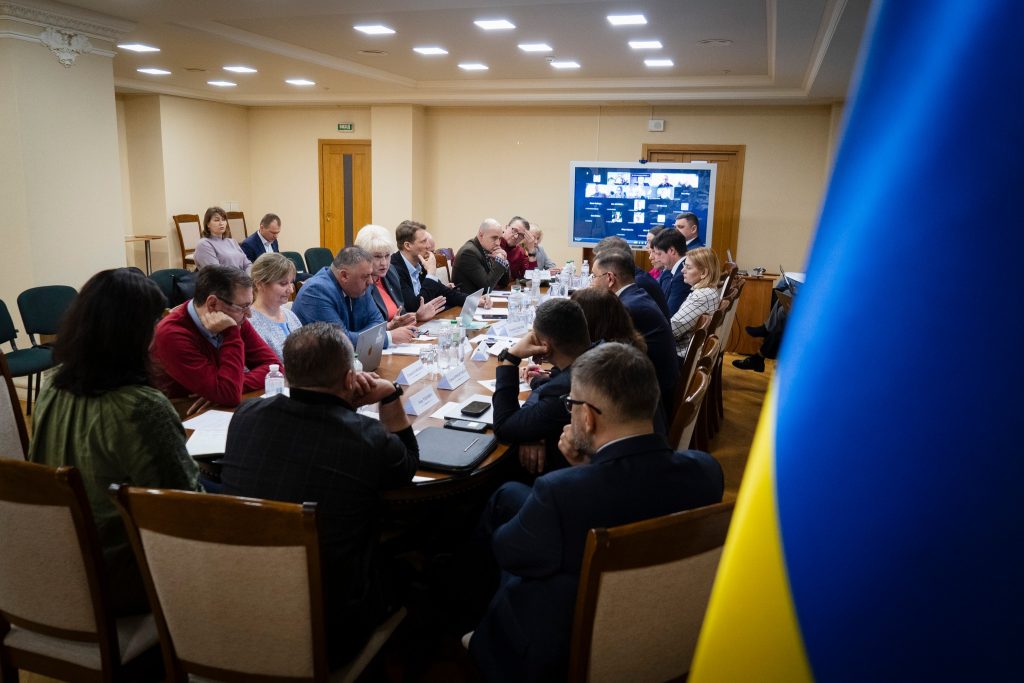
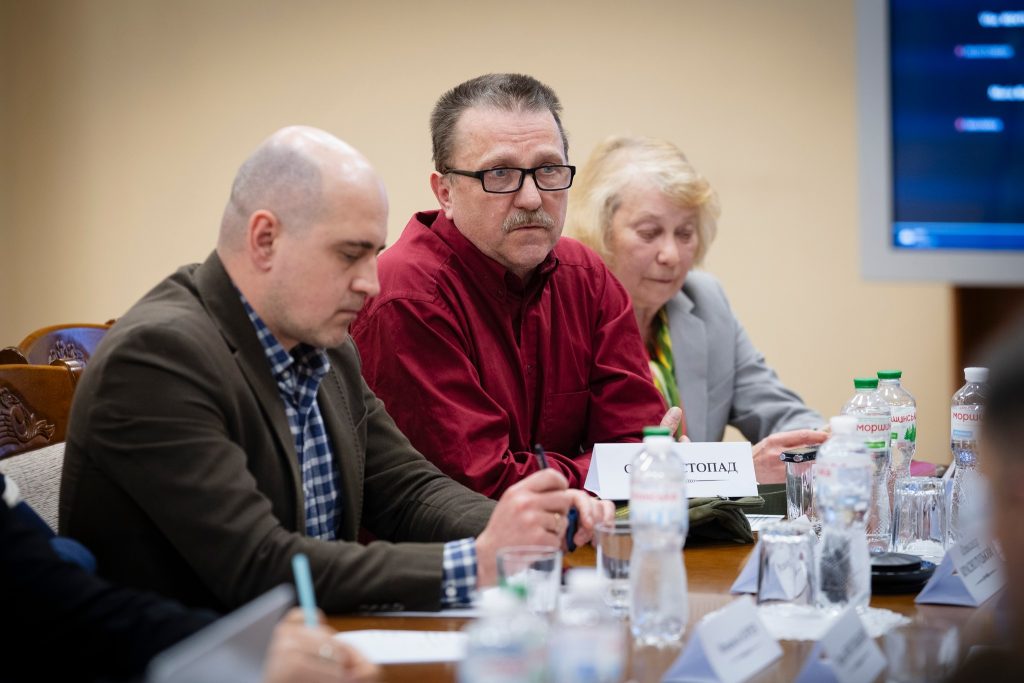
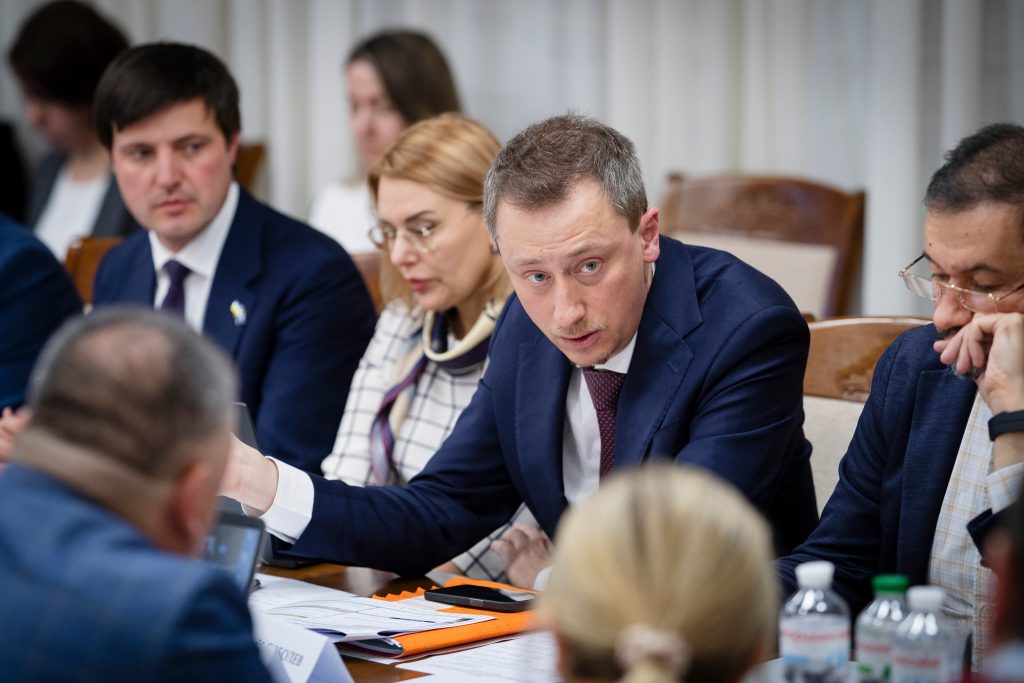
On April 3, 2026, a high-level meeting chaired by Ukraine’s Minister of Economy, Environment, and Agriculture, Oleksii Soboliev, took place to discuss the state of the water sector and prospects for its reform. The discussion brought together government officials, scientists, members of parliament, and civil society around a key question: how to transform Ukraine’s water policy amid war, climate change, and European integration.
Old Infrastructure, New Challenges
Ukraine inherited water management infrastructure from the Soviet era, designed for a different economy, a different climate, and different consumption standards. More than 80% of these systems were physically worn out. But alongside chronic problems, new wartime challenges have emerged.
As Minister Soboliev noted, Russia is systematically targeting water management infrastructure, and the intensity of these attacks is increasing. The consequences include not only physical destruction but also pollution of water bodies. One of the most recent examples is the contamination of the Dniester River.
The scale of the problem is also reflected in another fact: Ukraine’s State Water Agency operates three laboratories accredited according to international standards. Yet despite four years of full-scale war, Ukraine still has no officially approved list of specific war-related pollutants.
What the Ministry of Economy Is Doing
Deputy Minister of Economy, Environment, and Agriculture of Ukraine, Iryna Ovcharenko, outlined three dimensions shaping modern water policy: wartime, national, and European integration.
Monitoring.
This year, for the first time in many years, Ukraine has restored its groundwater monitoring program, with observations to be conducted at 80 locations. Until the early 1990s, the Ministry of Geology maintained a powerful network of 8,000 monitoring wells. This is particularly important because groundwater became a critical reserve source of water supply after the destruction of the Kakhovka Dam, when large numbers of wells were drilled in the Kherson and Mykolaiv regions — often under emergency conditions and without proper quality control.
Legislation.
Last year, Ukraine adopted the law on operators of hydraulic structures and canals (No. 4795-IX). The law allows for the simplified decommissioning and removal of outdated irrigation and drainage systems that are no longer in use but continue draining water from wetlands. This opens the way for peatland restoration — a process already actively implemented in Poland and the Czech Republic in line with EU directives. Old canals are blocked with wooden or clay plugs, allowing wetlands to gradually recover.
The law also shifts land reclamation management from a budget-funded maintenance model to a service-based model. Instead of old state structures, state-owned non-commercial operating enterprises are being created, capable of attracting investment for modernization. At the same time, a draft law is being prepared on restoring the free flow of rivers and introducing environmental flow standards.
River Basin Management Principle.
Integrated river basin management — a requirement of the EU Water Framework Directive — currently exists in Ukraine largely “on paper.” Basin councils have been established and river basin management plans approved, but implementation remains minimal: in 2025, activities began at only six sites included in the plans.
Institutional Capacity.
One figure illustrates the situation particularly clearly: in the ministry, water policy regarding surface, groundwater, and marine waters is effectively handled by only three people. The creation of an additional department dedicated to implementing EU water legislation is planned.
The European Integration Context
Water reform is not only a domestic task. Compliance with the EU Water Framework Directive is one of the benchmarks on Ukraine’s path toward EU membership, and the European Commission will assess progress annually. According to many participants in the meeting, Ukraine may already receive substantial remarks in the 2026 assessment report.
Among the key priorities are the implementation of an integrated digital water cadastre, the development of a monitoring system in line with European standards, and the real — rather than merely declarative — implementation of river basin management plans.